 by
by 


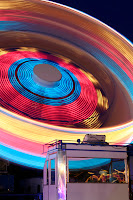

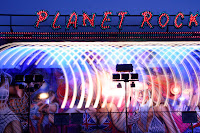
The word “Photography” comes from the Greek “phos” which is light and “graphê” which is drawing. Just as we draw pictures with pencils, crayons, and brushes, onto paper or a canvas, photographs are drawn with light onto the camera film or digital sensor.
Any photo needs light. You can have on the best outfit with the most dazzling jewelry, see the most beautiful landscape, or witness the most action-packed sporting event. If your light is not good, you might as well put away the camera because no one will see the image. Therefore, we need a good light source (a camera flash, the sun, studio strobes, etc.). The common trait of the previous light sources is they are stationary while the photo is captured.
Our typical photos are taken faster than the blink of an eye. Therefore, there isn’t much time for anything to move. However, what about photos that require a slow shutter speed? Try taking a picture in a dark room without a flash. The person or image will be blurry because of camera shake or he/she moved. We often discount these images as a mistake or bad photos.
However, what happens when this is done on purpose? What if we want to photograph the light moving? We have seen many examples of light moving in an image. Photos showing streams of light from car headlights or taillights are common examples.
Deborah and Jordyn noticed a small fair near our neighborhood during their excursion into the nearby town centre (we spell it “re” in the UK). Jordyn was excited to visit and experience the many rides. However, I was eager to photograph the rides during twilight to capture the moving light patterns with the background of the cobalt blue sky. Since twilight only lasts for 10-15 minutes. I would have to work quickly.
Two of the images are taken without any movement. They are placed next to the ones with movement to show the difference. However, most of them captured diverge from the normal shots one would take. I captured several rides as they twirled in the night sky. The blurry subjects represent the light forming colorful patterns more interesting than if I took the shots at a normal speed. The moving lights were the paintbrushes drawing the picture. I just provided the canvas.
-Roger

 by
by 

